My 2021 Language Learning Goals and Reading Plans (eng subs)

Hello friends! Here are my language learning goals and reading plans for 2021. I know I’m a little late but better late than never!

Читать далее

Timestamps:
0:00 Introduction
0:17 Language Learning goals
3:29 Reading Plans
5:12 Conclusion

The best methods and techniques for improving communication skills were discussed in more detail in one of my previous videos here https://www.youtube.com/watch?v=hz1OV…

I would really love to know what your goals are for this year.
Are you planning to learn a new language in 2021? Or maybe this year you (like me) are going to focus on maintaining and improving the languages you are already learning?

If you have any Spanish grammar book recommendations, please leave a comment down below. I’m trying to find a good book with clear grammar explanations and useful examples of Spanish verb tenses.

Also please let me know your favourite classic novels. I’d love to read more good classical literature in different languages.

I would really appreciate all your thoughts, ideas and book recommendations!

Thank you so much for watching and Happy reading!


P.S. I apologize for reading from a script. As some of you already know my story, I can read, write and understand but I still struggle to put my thoughts into words even in my own language – Russian. :)

Here is my story:

I understand but I can’t SPEAK – my language learning problem – https://www.youtube.com/watch?v=rVElN…

My language journey in 5 languages (Russian, English, Spanish, Polish and Armenian) – https://www.youtube.com/watch?v=k4Bqr…


Let’s learn languages together!
▶ Subscribe to my channel for more videos! https://www.youtube.com/channel/UC3LK…
▶ Mail: info@silentpolyglot.com

#languagegoals #languagelearning #readingplans

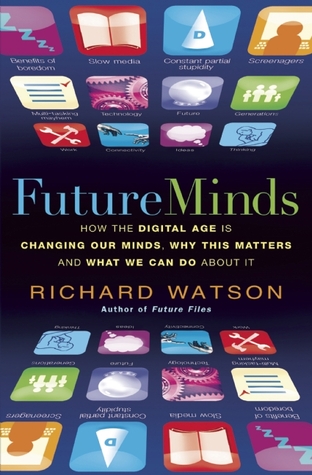
Future Minds – Richard Watson

Just finished reading Future Minds: How the Digital Age Is Changing Our Minds, Why This Matters, and What We Can Do About It by Richard Watson.

This is by far one of the best nonfiction books I’ve ever read! It was published back in 2010, but it’s worth reading even today. The author has captured the problems we are facing right now: how this new digital age is changing the way we think, our ability to focus and compose new ideas, and much more.

I really liked some of his quotes. For example:


“We have developed a culture of instant digital gratification in which there is always something to do – although, ironically, we never seem to be entirely satisfied with what we end up choosing.”

“We have also created a society in which schools teach children how to pass exams but don’t generally teach children how to think.”


“While we may be communicating with each other more, we may be listening and understanding each other less.”


“Fakery, insincerity, and big fat lies all prosper in a world that is too busy or distracted.”


“… too much information isn’t just useless, it’s harmful.”


“… digitization plus connectivity has increased the amount of information it’s now possible to consume to the extent that our attention is now fragmented all of the time.”


“We need to do a little less and think a little more. We need to slow down – not all the time, but occasionally. We need to stop confusing movement with progress…”


So it was a very interesting and thought provoking book, and I really enjoyed reading it.
I would definitely recommend this book to anyone who has concerns about our rapidly changing world in the digital era. 👍🤗

Started Reading – 11 November 2020
Finished Reading – 11 January 2021
My Rating5 Stars ★★★★★

Top 7 Books I Read in 2020 – Reading in different languages – EN, ES, PL, RU (eng subs)

Hey guys! Today I’m sharing my top 7 books that I read in 2020 in different languages (English, Spanish, Polish, Russian).

Читать далее

Timestamps:
0:00 Introduction
0:55 Book in Polish – Harry Potter i więzień Azkabanu – J.K. Rowling
1:57 Book in Spanish – Su Alteza, el Intérprete: El fascinante mundo de la traducción simultánea
2:40 Book in Russian – Диктор телевидения – Брус Льюис
3:27 Book in Russian – А. С. Пушкин. Письма к жене
4:30 Book in English – The Rise of Homo Sapiens: The Evolution of Modern Thinking
5:11 Book in English – The One Safe Place by Tania Unsworth
6:01 Book in English – Scorched by Michael Soll
7:28 Conclusion

I’d love to hear your thoughts, guys!
Please leave a comment down below and let me know if you’ve read any of the books I mentioned.
Also I’d love to hear your book recommendations. I’m always looking for a good book to read, especially in English, Spanish, Polish, Ukrainian, Belarusian!
Thank you so much for watching. Happy reading!

———————————
P.S. I apologize for reading from a script. As some of you already know my story, I can read, write and understand but I still struggle to put my thoughts into words even in my own language – Russian. :)

Here is my story:

I understand but I can’t SPEAK – my language learning problem – https://www.youtube.com/watch?v=rVElN…

5 language teachers ENG/ESP/POL and one therapist. What did they tell me about my language problem? – https://www.youtube.com/watch?v=hz1OV…

My language journey in 5 languages (Russian, English, Spanish, Polish and Armenian) – Learning Languages by Reading Books– https://www.youtube.com/watch?v=k4Bqr…

———————————
Let’s learn languages together!
▶ Subscribe to my channel for more videos! https://www.youtube.com/channel/UC3LK…
▶ Mail: info@silentpolyglot.com

#LanguageLearning #polyglot #bestbooks

All the books I read in 2020!

Here are all 39 books I read in 2020 – in English, Spanish, Polish, Russian and Belarusian.

English 🇺🇲

1) Scorched by Michael Soll
2) The One Safe Place by Tania Unsworth
3) The Rise of Homo Sapiens: The Evolution of Modern Thinking by Frederick L. Coolidge, Thomas Wynn
4) Microcosm: E. Coli and the New Science of Life by Carl Zimmer
5) Rabbits with Horns and Other Astounding Viruses (Chicago Shorts) by Carl Zimmer
6) Horses in Fact and Fiction – An Anthology by Åke Runnquist
7) Poultry Behaviour and Welfare by Michael C. Appleby, J.A. Mench, B.O. Hughes
8) In Search of the Indo-Europeans: Language, Archaeology, and Myth by J.P. Mallory
9) First Light by Rebecca Stead
10) The Cold King by Amber Jaeger
11) House of Stairs by William Sleator
12) A Different Blue by Amy Harmon
13) The Distance Between Us by Kasie West
14) 10 Rules for Achieving English Fluency: Learn how to successfully learn English as a foreign language by Anthony Kelleher
15) The Black Death: A History from Beginning to End by Henry Freeman
16) Creativity in Human Evolution and Prehistory by Steven Mithen
17) The Other Side of the Island by Allegra Goodman
18) Double Helix by Nancy Werlin
19) Ten Interesting Things about Human Behavior by Suzanne L. Davis
20) Don’t Fall by Rachel Schieffelbein

Read more…

Spanish 🇪🇸

1) Su Alteza, el Intérprete: El fascinante mundo de la traducción simultánea – Ewandro Magalhaes
2) Parasitología Veterinaria – M. Cordero del Campillo, F. A Rojo Vázquez
3) Una Nota Falsa (Lola Lago detective 2) – Lourdes Miquel, Neus Sans
4) Poderoso Caballero (Lola Lago detective 3) – Lourdes Miquel, Neus Sans
5) Por Amor Al Arte (Lola Lago detective 4) – Lourdes Miquel, Neus Sans
6) La Llamada de la Habana (Lola Lago detective 5) – Lourdes Miquel, Neus Sans
7) Lejos de Casa (Lola Lago detective 6) – Lourdes Miquel, Neus Sans
8) ¿Eres tú, María? (Lola Lago detective 7) – Lourdes Miquel, Neus Sans

Polish 🇵🇱

1) Harry Potter i Kamień Filozoficzny (Harry Potter 1) – J.K. Rowling
2) Harry Potter i Komnata Tajemnic (Harry Potter 2) – J.K. Rowling
3) Harry Potter i Więzień Azkabanu (Harry Potter 3) – J.K. Rowling
4) Legendy Polskie – Wanda Chotomska

Russian 🇷🇺

1) А. С. Пушкин. Письма к жене
2) Диктор телевидения – Брус Льюис
3) Речевой тренинг. Дикция и произношение – Л.Д. Алфёрова
4) Экологическая паразитология – К. Кеннеди
5) Медицинская паразитология – под ред. Н.В. Чебушева
6) Научные основы экологической паразитологии – В.И. Трухачев, В.П. Толоконников, И.О. Лысенко

Belarusian 🇧🇾

1) Старасвецкія міфы горада Б – Людміла Рублеўская

My language learning journey in 5 languages (eng subs) – Learning Languages by Reading Books

Hi! Here’s my language journey in Russian, English, Spanish, Polish and Armenian. I’m learning languages mainly by reading books and I’d like to share with you my experience so far.

Читать далее

Timestamps:
0:00 Introduction (English)
0:22 Russian
0:53 English
3:33 Spanish
5:59 Polish
9:00 Armenian
10:41 Conclusion (English)

You know… there is something magical about books. The more I read the more I want to read!
Reading books in other languages for me is always a way of knowing new things, learning about other cultures and customs, understanding different ways of expressing our thoughts and needs in different languages. Every new language for me is like a new opportunity, a key to better understanding our world – so complicated but so interesting, so wonderful!

I’d love to hear your thoughts, guys!
How many languages can you speak or understand?
Do you like reading books in different languages? What kind of books do you like to read the most?
Let me know in the comments below. Are there any bookworms + language learners out there?

Also I’d really appreciate all your feedback, any correction and any advice you could give on how to improve my pronunciation in English, Spanish and other languages.

Thank you for watching and Happy reading! 💕
Bye!
¡Adiós!
Pa pa!
Ցտեսություն:

———————————
P.S. I apologize for reading from a script. As some of you already know my story, I can read, write and understand but I still struggle to put my thoughts into words even in my own language – Russian. :)

Here is my story:
I understand but I can’t SPEAK – my language learning problem – https://www.youtube.com/watch?v=rVElNKVWM18&t=0s

5 language teachers ENG/ESP/POL and one therapist. What did they tell me about my language problem? – https://www.youtube.com/watch?v=rVElNKVWM18&t=0s

———————————
Let’s learn languages together!
▶ Subscribe to my channel for more videos! https://www.youtube.com/channel/UC3LK…
▶ Mail: info@silentpolyglot.com

#languages #polyglot #multilingual


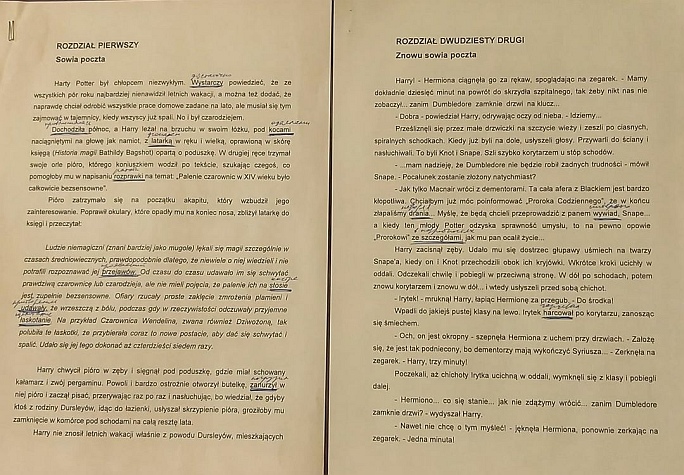
Harry Potter i więzień Azkabanu

Прочитала 3 ГП в польском варианте. 🇵🇱 Чуть больше месяца заняло. 🤗

Скорость чтения и понимания текста возрастает, а вот незнакомых слов меньше не становится. Прямо с первой главы чувствуется усложнение языка, увеличение словарного запаса. Хм, никогда не думала, что это будет ощущаться так отчетливо не только при чтении на английском (в оригинале), но и в других языках тоже.

I asked 5 native speaker teachers (EN, SP, PL) and one Russian therapist about my language problem

Five native speaker teachers from different countries and also one Russian psychologist. What did they all tell me about my problem of speaking in foreign languages? And what strategies do they recommend for improving communication skills, in addition to those I’m already using?

Читать далее


Timestamps

2:04 English teacher from England
3:18 English teacher from the USA
4:06 Spanish teacher Mexico
5:58 Spanish teacher from Spain
6:52 Polish teacher from Poland
9:46 Psychologist from Russia

Hi! I’m Kate, a bookworm and a language enthusiast. For many years “I understand but I can’t speak” is by far my biggest language learning problem. In some of my previous videos, I spoke about that.

Here is a link:
▶ I understand but I can’t SPEAK – my language learning problem – https://www.youtube.com/watch?v=rVElN…
See the Russian version here:
▶ Все понимаю, но не говорю – моя проблема при изучении языков – https://www.youtube.com/watch?v=VLdIR…

I was thinking maybe I should ask someone who is much more experienced than me, someone who works with language learners every day? So, I’ve decided to ask some native speaker teachers with different levels of experience – what do they think about my inability to speak fluently, effortlessly, inability to speak without using a whole script, that I need to write down every time before speaking.

I took online lessons with 5 different Italki teachers (native speakers) from different countries:

  • English from England and the USA
  • Spanish from Spain and Mexico
  • Polish from Poland

I’ve also consulted a psychologist (therapist) from Russia. This was my first ever visit to a psychologist and I’ve had a really interesting conversation with her. :)

I enjoyed all the lessons and I also received a lot of useful advices and a valuable feedback from all the teachers (and the psychologist too!). Each of them suggested using different methods to solve my speaking problem and in this video I’d like to talk to you guys about that.

Thank you very much for watching!

I’d love to hear your thoughts, guys! Please leave a comment below and let me know what you think. What methods of improving speaking skills have you found most effective, most helpful? Which one worked best for you?
Is it really possible that our unhappy childhood memories can affect us as adults that much?..

I really appreciate your help, any thoughts, feedback and suggestions!


Let’s learn languages together!

▶ Subscribe to my channel for more videos! https://www.youtube.com/channel/UC3LK…
▶ Mail: info@silentpolyglot.com

Thank you so much for watching 💕

#LanguageLearning #speakingskills #SpeakingProblems

Harry Potter (book in Polish)

🇬🇧 Just finished reading the second Harry Potter book in Polish (Harry Potter and the Chamber of Secrets). 💖

🇵🇱 Własnie skończyłam czytać 2 tom opowieśći o Harrym Potterze po polsku (Harry Potter i Komnata Tajemnic). Stopień trudności tekstu wzrasta, ale nieznanych słów znacznie mniej i teraz mogę czytać znacznie łatwiej i szybciej.

🇷🇺 Только что закончила читать 2 том о Гарри Поттере на польском (Гарри Поттер и Тайная комната). Уровень трудности теста возрастает, но незнакомых слов заметно меньше, а потому – читать значительно проще и быстрее. 

Языковой барьер – что сказали преподаватели-нейтивы ENG/ESP/POL и психолог о моей проблеме

Мнение пяти преподавателей нейтивов из разных стран, а также психолога о языковом барьере, причинах моей периодической языковой «немоты» и путях решения данной проблемы. И что я сама обо всем этом думаю.

Читать далее

Timestamps:
Что сказали преподаватели-нейтивы:

Всем привет! Меня зовут Екатерина и перед вами продолжение моей истории изучения языков, которую можно кратко и емко охарактеризовать одной фразой «понимаю, но сходу сказать мало что могу». Каждый раз вынуждена писать полный текст, скрипт того чего хочу сказать, а потом зачитывать его по бумажке.

Я об этом уже подробно говорила в предыдущих видео, и на русском языке, и на английском:
▶ Все понимаю, но не говорю – моя проблема при изучении языков https://www.youtube.com/watch?v=VLdIR_a_gwY&t=1s
▶ I understand but I can’t SPEAK – my language learning problem https://www.youtube.com/watch?v=rVElNKVWM18

Но одно дело, что я сама обо всем этом думаю, а другое – как это видят люди со стороны. Я решила, что стоит спросить мнения профессионалов и для этой цели взяла по одному занятию у пяти разных преподавателей – нейтивов из разных стран.

Кроме того, впервые в жизни побывала на консультации у самого настоящего психолога. И об этом тоже говорю в данном видео.

Также в конце ролика включены несколько фрагментов из моих занятий с данными преподавателями, где вы сами сможете увидеть (услышать), как я говорю без заранее заготовленного текста. Стыдно конечно такое показывать, но, наверное, лучше один раз показать в чем заключается проблема, чем много раз пытаться описать ее словами.

Все методы и способы как снять языковой барьер, которые мы обсуждали с преподавателями, я расположила в той последовательности, которая мне кажется наиболее верной: от самого действенного (эмиграция) вверху, и далее вниз к наименее эффективным пунктам:

Как разрушить языковой барьер?
1 – эмиграция
2 – языковой обмен (language exchange partner)
3 – уроки с профессиональными преподавателями – носителями языка
4 – путешествие в страну языка, желательно в одиночку
5 – слушать аудиокниги/подкасты и повторять за диктором (метод Shadowing)
6 – декламировать стихи и петь любимые песни
7 – читать вслух книги, которые интересны именно вам
8 – писать короткие истории и также зачитывать их вслух

Для меня очень важно ваше мнение! Что вы обо всем этом думаете?
Расскажите, как вы преодолевали языковой барьер? Какой метод именно для вас оказался наиболее эффективным, чтобы наконец-то разговориться? Уверена, ваша история и советы будут интересна не только мне, но и многим другим любителям иностранных языков, а также школьникам, студентам и их родителям!

Также обязательно пишите, если и у вас есть похожие проблемы. Подписывайтесь на канал, давайте поддерживать друг друга, и совместными усилиями развиваться и двигаться вперед!

Огромное спасибо за просмотр, поддержку и за понимание!

Ссылки на каналы замечательных лингвистов, полиглотов, о которых я говорила в данном видео:
▶ Канал Стива Кауфмана
Steve Kaufmann – lingosteve https://www.youtube.com/user/lingosteve
▶ Канал Александра Аргуэльеса
Alexander Arguelles https://www.youtube.com/user/ProfASAr


🔴 About
Hi! I’m Kate, a bookworm and a language enthusiast. For many years I enjoy reading books, listening to audiobooks, watching movies in different languages but I still can’t speak. I cannot express myself and my thoughts as clearly as fluently as I want (without a prepared script).
The same problem with my native language – Russian. Public speaking always was a nightmare to me… 🙈
So that is why I decided to start making videos in different languages. I really want to get out of my comfort zone, to overcome my fear of speaking in foreign languages and have an opportunity to talk to all of you guys about everything!!!
My friends call me a silent polyglot …. but I don’t want to be silent anymore! :)


Let’s learn languages together!

▶ Subscribe to my channel for more videos! https://www.youtube.com/channel/UC3LKg8AdU2SqmLYP7cH8x4A
▶ Mail: info@silentpolyglot.com

Thank you so much for watching 💕